
Table of Contents
If you’ve spent any time researching how to rank higher on Google, you’ve almost certainly run into this debate. Some experts swear that content and on-site optimization are everything. Others insist that without backlinks and external authority, nothing else matters.
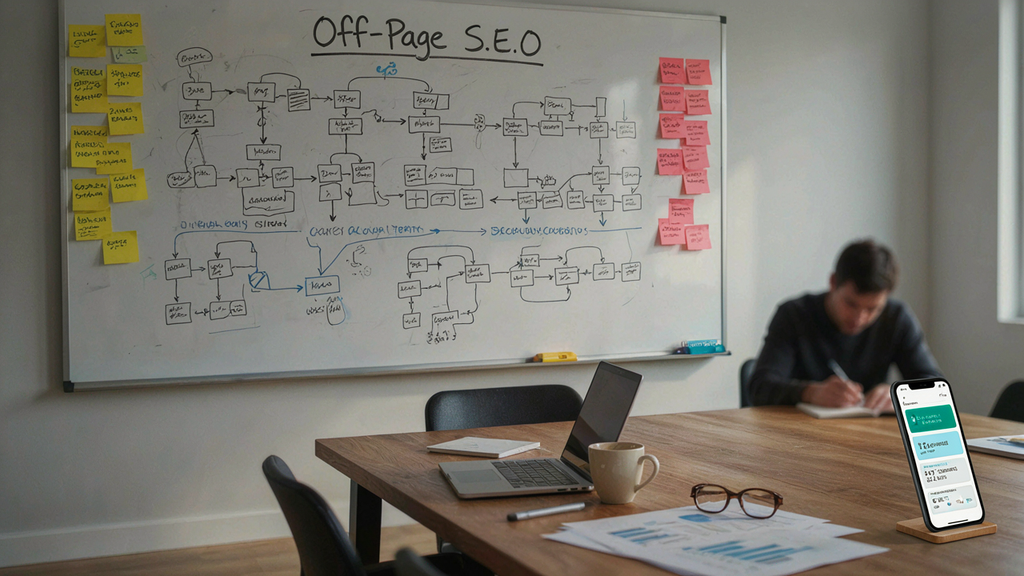
So which side is right? On-Page SEO vs. Off-Page SEO: What Matters More? is one of the most Googled SEO questions of 2026 and one of the most consistently misunderstood.
The honest answer isn’t as simple as picking a winner. But by the end of this article, you’ll have a clear, practical understanding of both, how they interact, and exactly where to focus your effort based on where your business actually stands.
First, Let’s Define the Terms Clearly
Before diving into On-Page SEO vs. Off-Page SEO: What Matters More?, let’s make sure we’re talking about the same things. These two terms get used loosely, and the confusion usually starts with a blurry definition.
On-Page SEO refers to everything you control directly on your website. The content you publish, how it’s structured, your title tags, meta descriptions, headings, internal links, image alt text, page speed, mobile responsiveness, and URL structure. All of it lives on your site, and all of it is within your control.
Off-Page SEO refers to everything that happens outside your website that influences your rankings. Primarily backlinks — other websites linking to yours — but also brand mentions, social signals, reviews, and how authoritative Google considers you based on what the rest of the internet says about you.
Both influence your Google rankings. The question is: in On-Page SEO vs. Off-Page SEO: What Matters More? — which one should you prioritize?
The Case for On-Page SEO

On-Page SEO is where your Google journey begins. Without it, off-page efforts are largely wasted.
Think of it this way: if someone links to a page on your website that loads in 8 seconds, has no clear structure, targets the wrong keyword, and fails to answer what the searcher is looking for that backlink does very little. Google still judges the destination, not just the road that leads to it.
Here’s what strong On-Page SEO actually means in practice:
Content that matches search intent. When someone types a query into Google, they have a specific intent, informational, navigational, or transactional. If your page doesn’t satisfy that intent clearly and completely, Google won’t rank it highly regardless of how many backlinks you have.
Title tags and meta descriptions. Your title tag is still one of the strongest on-page ranking signals. It tells Google and searchers exactly what the page is about. A well-written title that includes your target keyword and a compelling reason to click is foundational.
Header structure. One H1 per page, clear H2s that organize the content logically, and H3s that break down sub-topics. This structure helps both readers and Google crawlers understand your page’s hierarchy.
Page speed and Core Web Vitals. Google confirmed Core Web Vitals as ranking signals. Pages that load slowly, shift visually as they load, or respond sluggishly to interaction are penalized regardless of how authoritative the domain is.
Internal linking. How you connect pages within your own site distributes ranking authority to the pages that need it most and helps Google understand which pages are most important.
When discussing On-Page SEO vs. Off-Page SEO: What Matters More?, many businesses overlook how much foundation-level on-page work they still haven’t completed. They chase backlinks while their own site is technically broken, slow, or poorly structured.
The Case for Off-Page SEO
Now here’s the counterargument and it’s a strong one.
Google’s entire algorithm was originally built on backlinks. The core insight behind PageRank, the system Google was founded on is that a link from one site to another is essentially a vote of confidence. The more high-quality votes you receive, the more authoritative Google considers you.
That logic hasn’t fundamentally changed, even in 2026. In competitive industries, On-Page SEO vs. Off-Page SEO: What Matters More? tilts heavily toward off-page when you’re trying to outrank well-established competitors.
Here’s why Off-Page SEO carries so much weight
Domain authority. Google evaluates the overall trustworthiness and authority of your domain, not just individual pages. A site with hundreds of high-quality backlinks has a baseline authority advantage that on-page optimization alone can’t overcome.
Backlink quality over quantity. One link from a highly relevant, high authority website in your industry is worth more than 200 links from low-quality directories. Off-page SEO isn’t about getting as many links as possible, it’s about earning the right ones.
Brand signals. Google increasingly uses unlinked brand mentions, reviews, and citations as trust signals. A business that people are talking about across the web even without explicit links — gains credibility in Google’s eyes.
Competitive differentiation. If your on-page SEO is already solid and you’re still not outranking competitors, the gap is almost always in off-page authority. This is where the battle for top positions in competitive SERPs is actually won.
In the debate of On-Page SEO vs. Off-Page SEO: What Matters More?, off-page SEO is the factor that separates two equally well-optimized pages.
The Real Answer: They’re Not Competing — They’re Compounding
Here’s the truth that most SEO content doesn’t give you clearly enough:
On-Page SEO vs. Off-Page SEO: What Matters More? is actually the wrong question.
The real question is: “In what sequence should I build them, and how do they work together?”
The relationship between on-page and off-page SEO is not a competition. It’s a compound system. On-page SEO creates the foundation that makes off-page efforts effective. Off-page SEO amplifies the content that on-page optimization has already prepared.
A page that is perfectly optimized on-site but has no backlinks will struggle in competitive searches. A page with excellent backlinks but poor on-page optimization will plateau and often ranks for the wrong terms.
The businesses winning on Google in 2026 are the ones that:
- Built a technically sound, well-optimized website first
- Created genuinely useful, search-intent-matched content
- Systematically earned quality backlinks to their strongest pages
- Continue doing both simultaneously as an ongoing practice
This is the answer to On-Page SEO vs. Off-Page SEO: What Matters More?, not which one wins, but understanding that each has a phase and a function.
So Where Should YOU Focus First?

Context matters. The right answer to On-Page SEO vs. Off-Page SEO: What Matters More? depends entirely on where your business currently stands.
If your website is new or recently launched:
Start with on-page SEO completely. There’s no point pursuing backlinks to a site that isn’t technically optimized, loads slowly, has thin content, or lacks clear structure. Get the foundation right first.
If your website has solid on-page fundamentals but rankings are stagnant:
Off-page SEO is likely your bottleneck. If competitors in your space consistently outrank you despite your content being equally good, domain authority and backlink profiles are almost always the differentiating factor.
If you’re in a low-competition niche or targeting local searches:
On-page SEO and local SEO signals (Google Business Profile, local citations, reviews) often carry enough weight to rank well without an aggressive backlink strategy. Local search is less dependent on off-page factors than national or international competition.
If you’re in a highly competitive market:
You need both, simultaneously and consistently. Neither on-page excellence nor off-page authority alone will break you into the top positions when every competitor is investing heavily in their SEO.
Understanding this nuance is what separates businesses that waste SEO budgets from those that generate genuine ROI.
Common Mistakes on Both Sides

When exploring On-Page SEO vs. Off-Page SEO: What Matters More?, it’s worth knowing the mistakes that derail results on each side.
On-Page mistakes businesses make:
- Targeting keywords without understanding search intent — writing content for a term that users aren’t searching the way you think they are
- Keyword stuffing — forcing a target keyword in unnaturally, which Google detects and penalizes
- Ignoring technical SEO — broken links, crawl errors, missing meta tags, and slow load times that undermine even great content
- Creating thin content — short, surface-level pages that don’t fully answer what the searcher needs
- Neglecting internal linking — leaving important pages as orphans with no internal authority flowing to them
Off-Page mistakes businesses make:
- Buying low-quality backlinks — a practice that can trigger Google penalties and actively harm rankings
- Pursuing quantity over relevance — 500 links from irrelevant or spammy sites are worse than 10 links from authoritative, topically relevant sources
- Ignoring anchor text diversity — over-optimized anchor text (too many exact-match keywords) is a red flag for Google’s spam detection systems
- Ignoring reviews and citations — especially for local businesses, these off-page signals carry significant weight and are consistently underutilized
Avoiding these mistakes on both sides is as important as executing the right tactics.
A Practical Framework: What WebExperts Recommends

At WebExperts, our approach to the On-Page SEO vs. Off-Page SEO: What Matters More? question is always grounded in a client’s specific situation. But here’s the general framework we apply:
Month 1–2: Technical and On-Page Foundation
Full site audit, fix technical issues, optimize title tags and meta descriptions, restructure internal linking, improve page speed, ensure mobile optimization, and align content with search intent.
Month 3–4: Content and Authority Building
Develop new content targeting high-value keywords, optimize existing content that’s underperforming, set up a Google Business Profile, build local citations, and begin a systematic backlink outreach strategy targeting relevant, authoritative sites.
Month 5+: Compounding Both Simultaneously
Continue publishing optimized content while building backlinks to your highest-value pages. Monitor Core Web Vitals, track keyword movements, and iterate based on real data.
This approach answers On-Page SEO vs. Off-Page SEO: What Matters More? not theoretically but practically with a sequence that maximizes results based on where a business actually is.
The Bottom Line
On-Page SEO vs. Off-Page SEO: What Matters More? comes down to this:
On-page SEO is your foundation. Without it, nothing else works properly. Off-page SEO is your amplifier without it, your ceiling is low no matter how good your content is. Together, they’re the complete SEO system that drives sustainable, compounding organic growth.
Stop thinking of them as competitors. Start building them as partners.
At WebExperts, we help businesses across Benin and West Africa build exactly this, a complete, data-driven SEO strategy that covers both on-page and off-page fundamentals, designed to deliver real rankings, real traffic, and real revenue.
📩 Ready to stop guessing and start ranking? Contact WebExperts today for a free SEO strategy session.
.